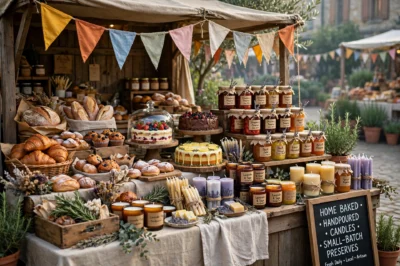
What sells best at a market stall in the UK? The short answer is food and drink — hot food, baked goods and fresh produce outsell almost everything else, because people buy them every week and eat them the same day. But “best seller” and “best profit” are not the same thing, and the right product for your stall depends on your margins, your market and how much time you have. This guide covers what actually sells, what it earns, and what to avoid.
One honest caveat: there is no published UK ranking of market stall best sellers. This guide is built from what traders, trade guides and market listings consistently report, not from a single official dataset. Treat the margin notes as typical ranges, not guarantees.
The best sellers, ranked
1. Hot food and street food
Hot food is the best seller at most UK markets. People come hungry, they buy on impulse, and they come back every week. A £9 to £12 plate with a food cost of roughly a third of the price leaves a healthy margin, and a busy Saturday can mean hundreds of sales. The catch is the cost of starting: you need food hygiene registration, a licence, insurance and proper equipment, and hot food pitches cost more than non-food pitches. If you can clear those hurdles, nothing else sells as fast.
2. Baked goods and cakes
Cakes, bread, brownies and pastries are the classic market stall product for a reason: they are cheap to make, they look beautiful on a stall, and people buy them as a treat or a gift. Margins are usually high, and you can bake at home under the right registration. The downside is a short shelf life — unsold stock at the end of the day is waste.
3. Fresh produce
Fruit, vegetables and plants sell steadily, especially at farmers’ markets. Margins are thinner than baked goods, and the stock is heavy and perishable, but regular customers buy every week, which makes income predictable.
4. Handmade crafts and gifts
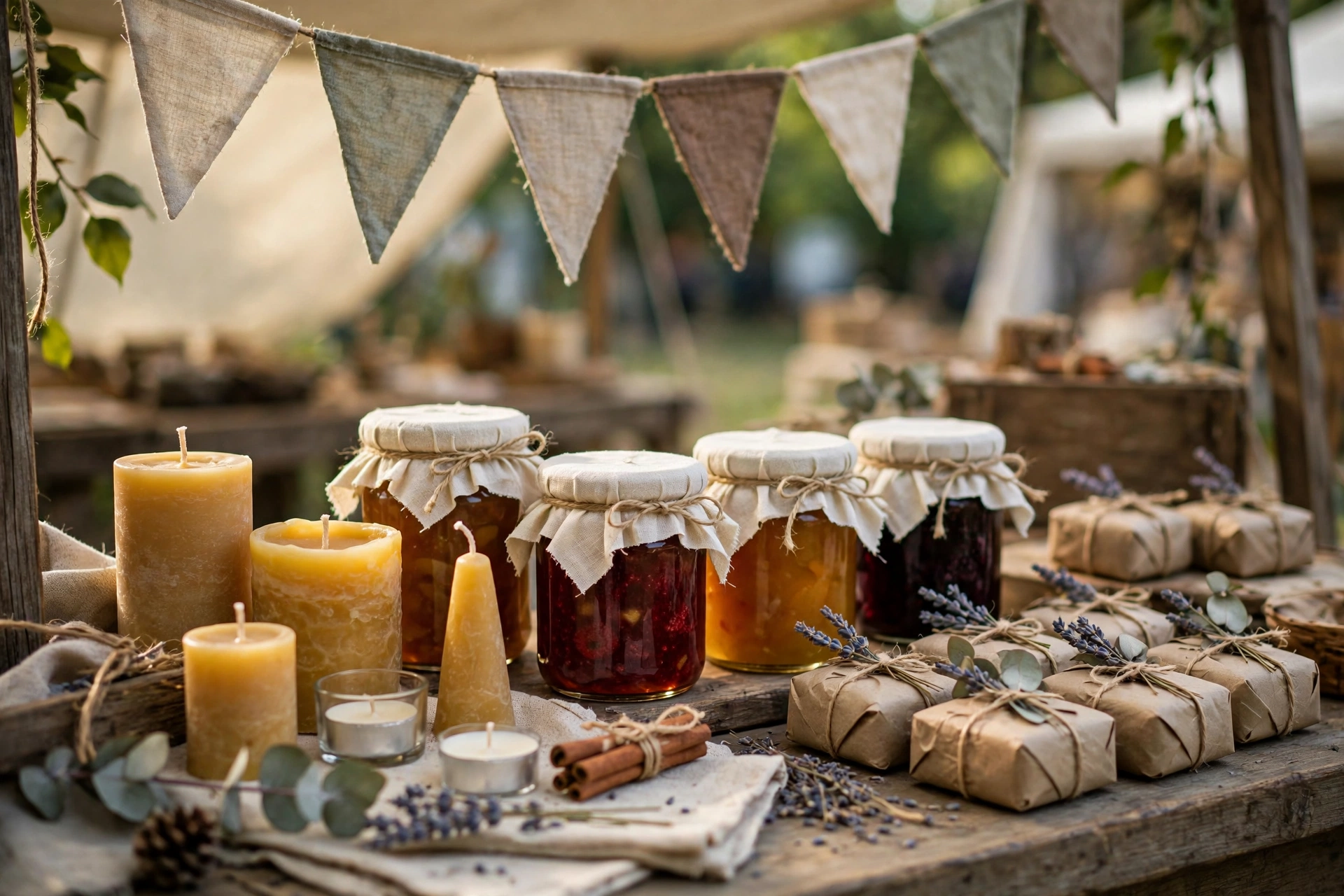
Candles, soaps, jewellery, prints and handmade gifts sell well at craft and Christmas markets, and they keep — no waste at the end of the day. Margins can be very high because the materials are cheap and the value is in your time. The catch is that your time is the cost: an hour spent making a £15 candle is an hour you cannot spend selling.
5. Vintage and second-hand
Vintage clothes, records and homeware sell well at the right markets, and the stock cost can be very low. The risk is inconsistency: you cannot reorder a one-off vintage find, so your stall changes every week.
6. Plants and flowers
Plants are a strong seller in spring and summer, with good margins and happy customers. They are seasonal, though, and they need care between market days.
What earns the most profit?
Profit is not just sales minus stock cost. A hot food stall might take £500 on a Saturday but pay a £63 pitch fee, plus gas, packaging and a licence. A candle stall might take £150 with almost no costs beyond the pitch. Work it out properly before you choose: our Break-Even Calculator shows how many sales you need to cover a day, and our Pricing Calculator shows the minimum price that makes a product worth selling.
As a rule of thumb, food and baked goods win on volume, crafts and gifts win on margin per sale, and the best stall is usually the one that matches what its owner enjoys making. A trader who loves baking will outsell a bored trader selling phone cases every time.
What sells best by season
Spring: plants, flowers, Easter gifts and baked goods. Summer: hot food, drinks, ice cream and festival stalls. Autumn: preserves, candles, knitwear and Halloween goods. Christmas: gifts, decorations, hampers and anything gift-wrapped — Christmas markets are the biggest trading days of the year, and pitch fees rise to match. Plan your stock around the season, not just around what you like making.
What to avoid
Avoid products that every other stall already sells — phone cases, generic jewellery and mass-produced toys compete on price alone, and you will lose to the cheapest seller. Avoid anything that needs explaining: if a customer has to ask what it is, they will walk past. And avoid stock you cannot reorder — a best seller you cannot restock is a one-week wonder.
How to test a product before you commit
Start small. Book one day at a smaller, cheaper market — London pitch fees run from about £19 to £99 a day depending on the market — and take a small range of products. Watch what people pick up, what they ask about and what actually sells. One good market day tells you more than a month of planning. Our London pitch fees guide lists what different markets charge, and the Startup Cost Calculator adds up what it costs to start.
Frequently Asked Questions
What is the most profitable thing to sell at a market stall?
Hot food usually takes the most money, and handmade crafts usually keep the highest margin per sale. The most profitable stall is the one whose owner knows their costs — use a break-even calculator before you choose a product.
Do market stalls make good money in the UK?
It varies enormously. Published guides report takings of roughly £250 to £900 a day for a good food stall, and much less for a quiet craft stall on a weekday. Your pitch fee, your margins and your market matter more than the product alone.
What sells best at a Christmas market?
Gifts, decorations, hampers, candles, hot drinks and festive food. Christmas is the biggest trading season, but pitch fees are also at their highest — up to £200 to £500 a day at some markets.
Can I sell food at a market without a licence?
No. Food traders need food hygiene registration, and most markets also require a street trading licence or the market operator’s permission, plus public liability insurance. Check with the market before you apply.
Ready to start? Try our free tools: the Break-Even Calculator, the Pricing Calculator and the Startup Cost Calculator.