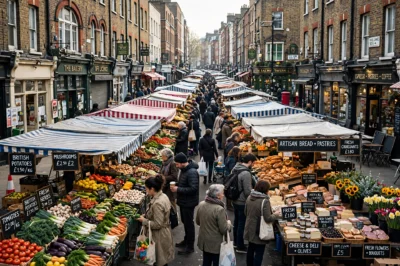
How much does a market stall pitch cost in London? Published fee schedules and market listings put most London pitch fees somewhere between about £20 and £200 a day, with central and high-footfall markets at the top end and smaller neighbourhood markets at the bottom. There is no single standard rate: the fee depends on the market, the size of the pitch, the day of the week and whether you sell food. This guide pulls the published figures together so you can compare them in one place.
All figures below come from published council schedules and market listings, and they change. Treat them as a guide to what to expect, and always confirm the current fee with the market operator before you book.
London market pitch fees compared
| Market / council | Typical pitch fee | Notes |
|---|---|---|
| Westminster markets | About £19 to £30 a day | Published booking rates; varies by market and pitch size |
| Lambeth markets | About £32 to £54 a day | Council fee schedule |
| Lower Marsh Market | Hot food from about £63 a day | Hot food pitches cost more than non-food |
| Stall & Craft Collective | About £60 to £70 a day | Single-market listing |
| Crafty Fox markets | About £70 to £99 a day | Single-market listing |
| London average (general guides) | About £20 to £200+ a day | Depends on location, size, footfall and day of the week |
| Christmas / festival markets | Up to £200 to £500 a day | Peak-season and event pitches |
The pattern is clear: council-run markets in outer London tend to be cheapest, while central London and food-led markets cost more. A hot food pitch almost always costs more than a non-food pitch in the same market, because food traders need more space, power and waste collection.
What affects the pitch fee?
Location and footfall. A pitch on a busy high street or in a famous market costs more than the same pitch in a quiet neighbourhood market, because more people walk past it. That is the single biggest factor in the price.
Day of the week. Saturday pitches usually cost more than weekday pitches, and Sunday is often cheaper than Saturday. Some markets charge a different rate for each day; others charge a flat weekly rate.
Pitch size. Most London pitches are priced by size, typically a 3m x 3m gazebo pitch as the standard. A double pitch costs roughly double, and a smaller table-only pitch costs less.
Food vs non-food. Food traders usually pay more, and may also pay extra for electricity, water and waste. Some markets also charge a separate fee for a food hygiene inspection.
Season. Christmas markets and summer festivals charge far more than a normal trading day — published figures reach £200 to £500 a day for peak-season pitches.
Pitch fees at Broadway Market Tooting
Broadway Market Tooting itself does not publish a pitch fee schedule, so there is no official figure to quote. As an indoor London market on a busy high street, its fees are likely to sit in the middle of the London range rather than at either extreme — but the only way to know the current rate is to ask the market operator directly. When you enquire, ask what the fee includes: some markets include electricity and waste collection, others charge them separately, and that changes the real cost of the pitch.
Can you negotiate a pitch fee?
Sometimes. Markets are more flexible on quiet weekdays than on Saturdays, and a trader who books a regular weekly pitch is often offered a better rate than a one-off trader. Sharing a pitch with another trader is another way to cut the cost, if the market allows it. What rarely works is haggling on the day — by then the pitch is either yours or it is not. The best negotiation is a polite email before you book, asking about weekday rates, regular-trader discounts and what is included in the fee.
What else will you pay on top of the pitch fee?
The pitch fee is only part of the day’s cost. Most traders also pay for stock, travel and parking, card reader fees (usually around 1.5% to 2.5% of each sale), public liability insurance (often around £65 to £70 a year for a standard policy, or about £25 a day for single-day cover), and sometimes electricity. Add them all up before you decide whether a pitch is worth it: our Break-Even Calculator works out how many sales you need to cover the day, and our Startup Cost Calculator adds up what it costs to start trading.
How to get a pitch in a London market
Most London markets are run either by the local council or by a private operator. Council markets usually have an application form and a waiting list; private markets are often quicker to join but cost more. Either way, expect to be asked for public liability insurance, a food hygiene certificate if you sell food, and a photo of your stall set-up. Apply early for popular markets — Saturday pitches at the best-known markets are often booked weeks ahead.
If you are new, start with a smaller neighbourhood market rather than a famous one. The pitch fee is lower, the regulars are friendlier, and you can test your products and prices before you pay central London rates.
Is a London market stall worth it?
It depends on your margins. A trader selling a £12 product with a £5 item cost keeps about £6.79 per sale after card fees. On a £60 pitch fee plus £10 travel, that means 9 sales to break even — very achievable on a busy Saturday, much harder on a quiet Tuesday. Work the numbers for your own products before you book: our Pricing Calculator shows the minimum price you need to charge, and the Card Fee Calculator shows what card fees cost you over a month.
Frequently Asked Questions
How much is a market stall pitch in London?
Published figures range from about £20 to £200+ a day. Council markets are usually £19 to £54 a day; private and food-led markets are usually £60 to £99 a day; Christmas and festival pitches can reach £200 to £500 a day.
Do I need a licence to trade at a London market?
Most London markets need a street trading licence from the local council or permission from the market operator, plus public liability insurance. Food traders also need food hygiene registration. Check with the market operator before you apply.
Are pitch fees cheaper outside London?
Usually, yes. Council fee schedules outside London are often £13 to £50 a day, compared with £19 to £99 a day in London.
Can I share a pitch to cut the cost?
Some markets allow it and some do not. Ask the operator: sharing a pitch with another trader is a common way for new traders to test a market at half the cost.
Planning to trade? Try our free tools: the Break-Even Calculator, the Pricing Calculator and the Startup Cost Calculator.